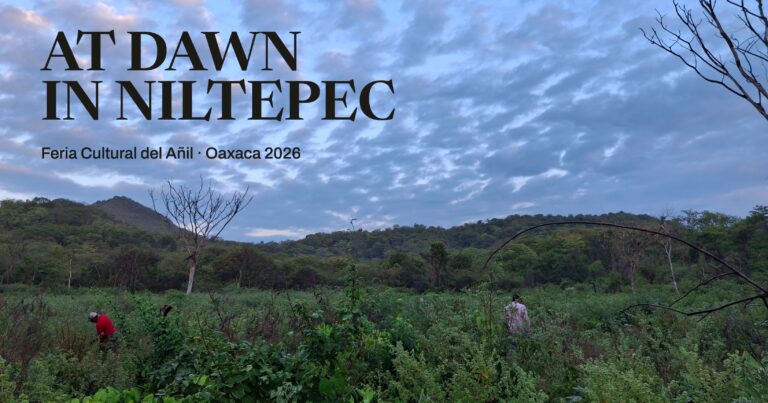

At 5 a.m. on Saturday, September 26, 2026, I joined an añil production tour outside Santiago Niltepec, Oaxaca. As daylight reached the fields, a worker was cutting leafy stalks with a machete. Bundles of plants lay on the ground. Later that morning, I saw an ox-drawn cart at work.
The visit was part of the fourth Feria Cultural del Añil, held that weekend in the Isthmus of Tehuantepec. The fair celebrated a natural blue pigment that people in Niltepec still know how to produce from a plant grown there.
I traveled from Oaxaca de Juárez with Diana García, who was scheduled to lead an arts workshop at the fair.
I had come to see how that blue begins.
At dawn in Niltepec’s jiquilite fields
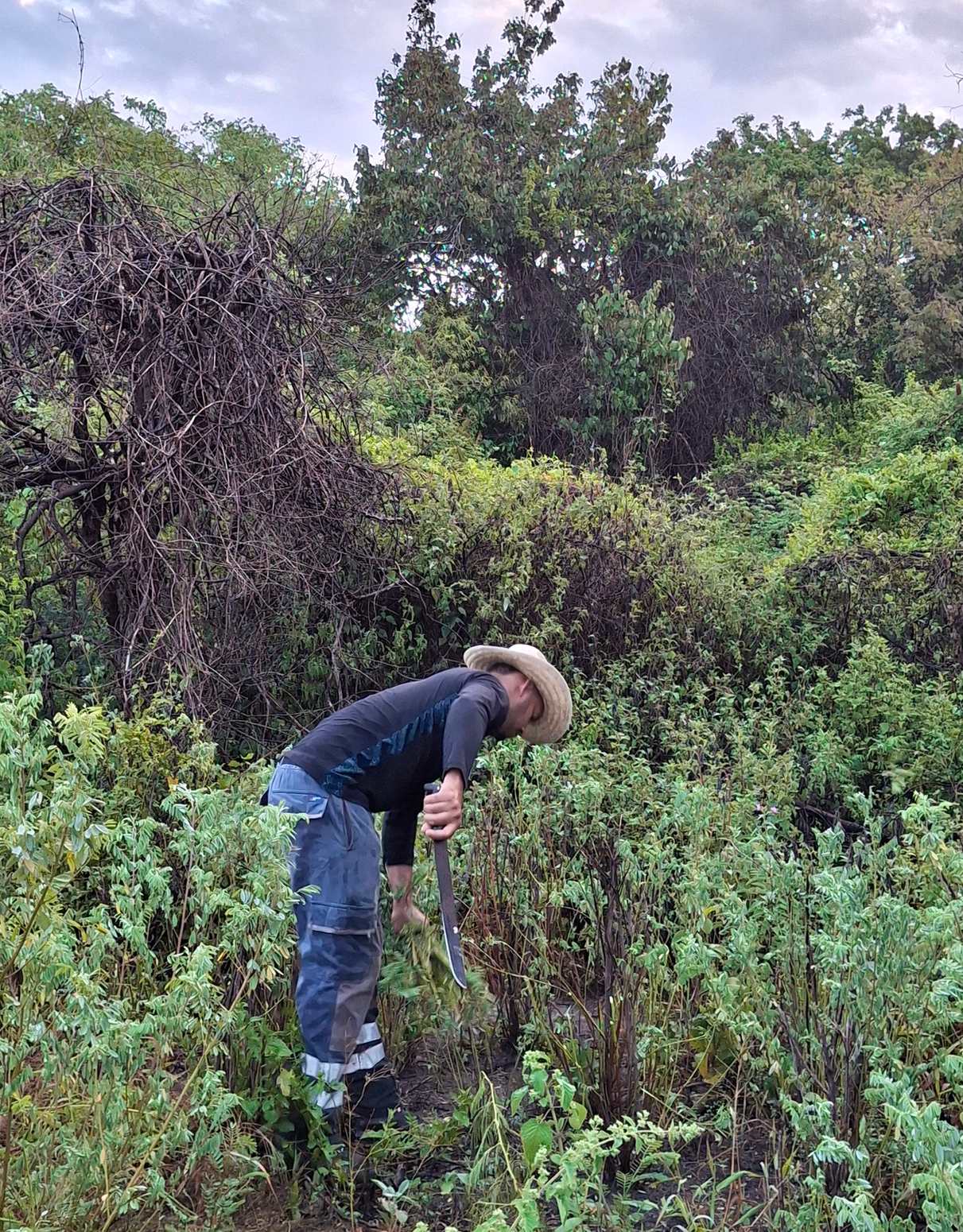
A fieldworker cutting jiquilite stalks in Santiago Niltepec on September 26, 2026. Photo: @gartesani.oax.
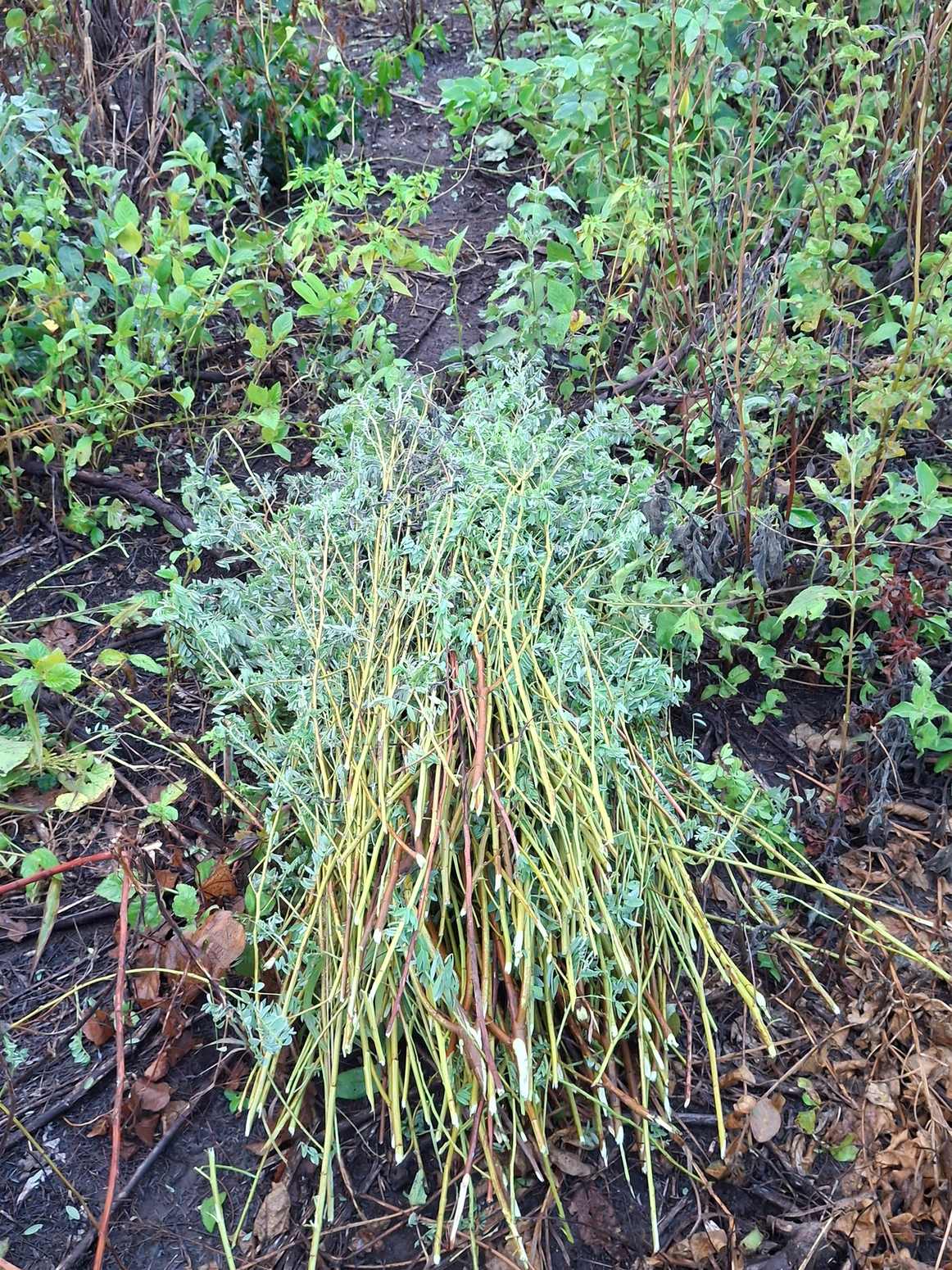
Freshly cut jiquilite stalks gathered during the early field visit. Photo: @gartesani.oax.
In the growing light, I watched the harvest and the handling of the cut stalks.
The plant is jiquilite, identified as Indigofera suffruticosa. The Museo Textil de Oaxaca describes Santiago Niltepec as one of the last places in Oaxaca where añil is still cultivated and produced.
I returned for the early tour on Sunday.
Hill of Indigo: What the Panels and Records Show
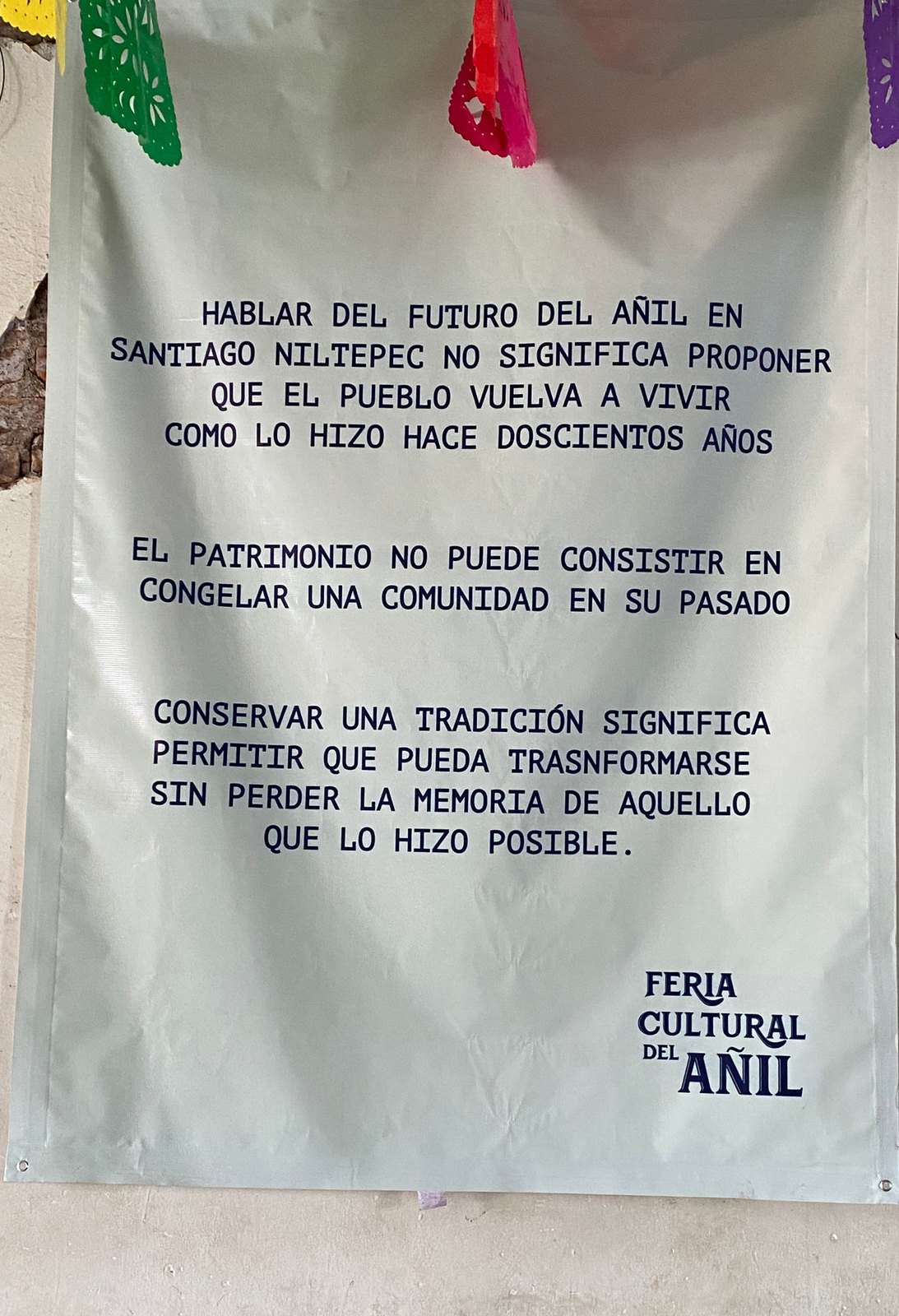
A fair exhibition panel explains how traditions can change while preserving memory of their origins. Photo: Fahad Hizam. Exhibition text: Feria Cultural del Añil.
The process of making añil extends beyond harvesting. México Desconocido describes cut jiquilite going into water-filled vats, with further work to develop and separate the pigment before it is dried for use. The fields gave me a view of the beginning of that chain. The technical details of its later stages came from published explanations and the displays at the fair. I did not see those later stages myself.
Inside the venue, one exhibition panel identified four kinds of evidence for Niltepec’s añil history. There were documentary records, surviving remains of old processing vats called pilas, family memories, and knowledge of the traditional obraje, or production workshop.
Family memory carries information that may never have been written down. Old vats give the stories a physical location. Seeing contemporary production alongside those references made the history easier to grasp.
Another panel offered a useful statement about continuity: traditions can change while keeping the memory of their origins.
According to the Museo Textil de Oaxaca, Niltepec’s colonial name translates as Cerro del añil, or Hill of Indigo. Citing historian Laura Machuca Gallegos (2007), the museum records rising international demand and increased añil production around 1800 in Niltepec and nearby Tapanatepec and Zanatepec. In 1826, cultivation and production of añil was Niltepec’s principal recorded activity, intended mainly for external markets. Sources cited by the museum associate the introduction of commercial production in the late 1780s with two merchants, Miguel Bejarano and Juan de Castillejos. Other authors describe smaller-scale local cultivation since pre-Hispanic times. The date when añil cultivation began there remains uncertain.
In 2013 and 2014, the museum documented producer Octaviano Pérez and his family, following the work from planting and harvesting through processing until the añil paste had solidified. Asked why he continued cultivating the plant, Pérez answered: “Porque es difícil; no cualquiera puede hacerlo” (“Because it’s difficult; not just anyone can do it”). The museum published photographs of each stage.
The Comité Organizador de la Feria Cultural del Añil also described production knowledge as living cultural heritage. Its message stressed that the community should retain control of knowledge transmitted through generations. I thought about that statement while moving between the fields and the stalls. The people making and maintaining the tradition belong at the center of its story.
Quadratín Oaxaca reported on Añiltepec, a project connecting cultivation, pigment production, and textile work. The article named Norma Nolasco of the family workshop Añiltepec, along with artisans Armando Rodríguez and Paulino Toledo. It also mentioned Arbid Vázquez in connection with the guardianes del añil, who share information about the process with visitors.
At the fair, from blue textiles to the calenda
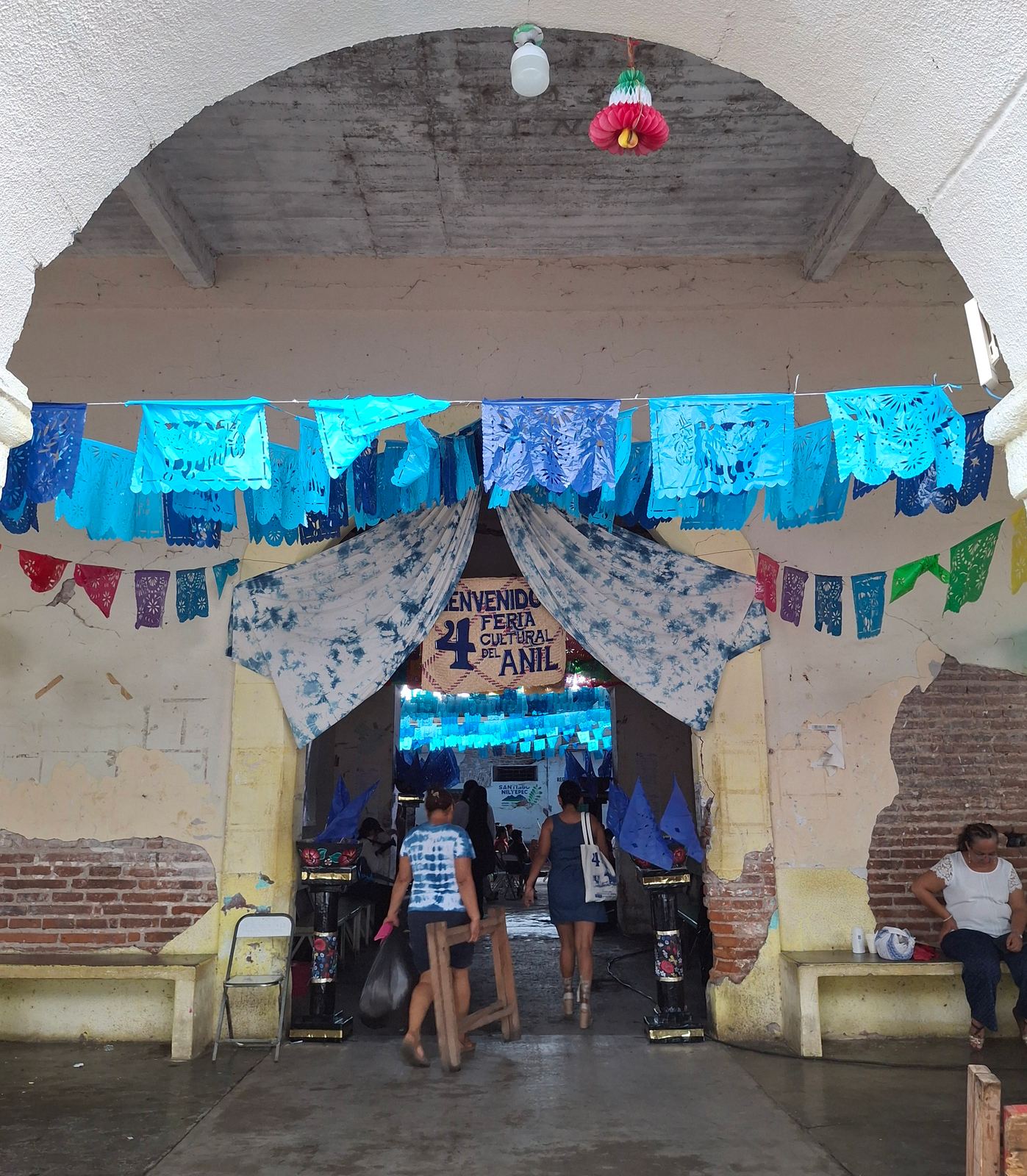
Blue papel picado decorates an entrance to the Feria Cultural del Añil venue. Photo: Fahad Hizam.
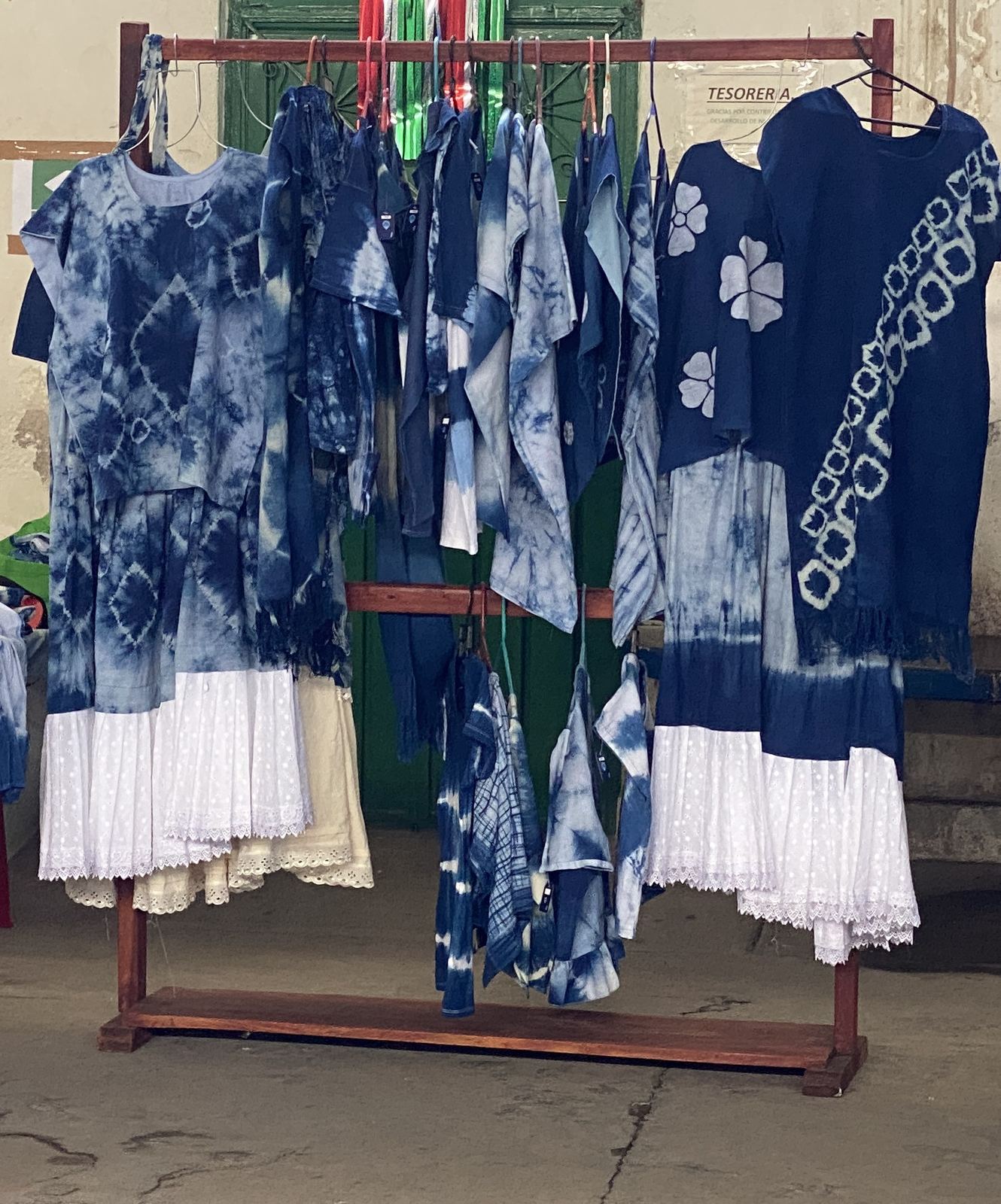
Blue-patterned garments displayed at a stall during the Feria Cultural del Añil. Photo: Fahad Hizam.
By Saturday morning, the fair was under way. I attended the opening ceremony and spent time among stalls displaying blue garments and handmade pieces. Paper decorations hung over the gathering areas. The market offered an opportunity to look closely at what local makers had brought.
There was food to try as well. I had pancita (beef tripe soup) and quesadillas during the trip and came across the region’s breads and other market foods. That part of traveling around Oaxaca matters to me.
I attended arts workshops and talks on Saturday and Sunday. The program included traditional añil dyeing as well as cyanotype, a photographic printing process that uses iron salts. Blue alone cannot tell you how an image was made, and I would not label a print as añil-dyed without knowing its materials.
The Saturday calenda brought the day’s activities into a public celebration. A calenda is a festive procession, commonly accompanied by music, that moves through the streets. I attended this one after the day’s workshops and presentations.
On Sunday, the program extended beyond dyeing and craft. I went to the volleyball tournament, returned to the market, attended additional arts activities and talks, and watched the Guardiana del Añil competition. I also attended the closing ceremony.
I had seen plants cut in a field, and later I saw how much attention their blue pigment could draw in a busy cultural venue.
Diana García’s workshop with Guajolotes
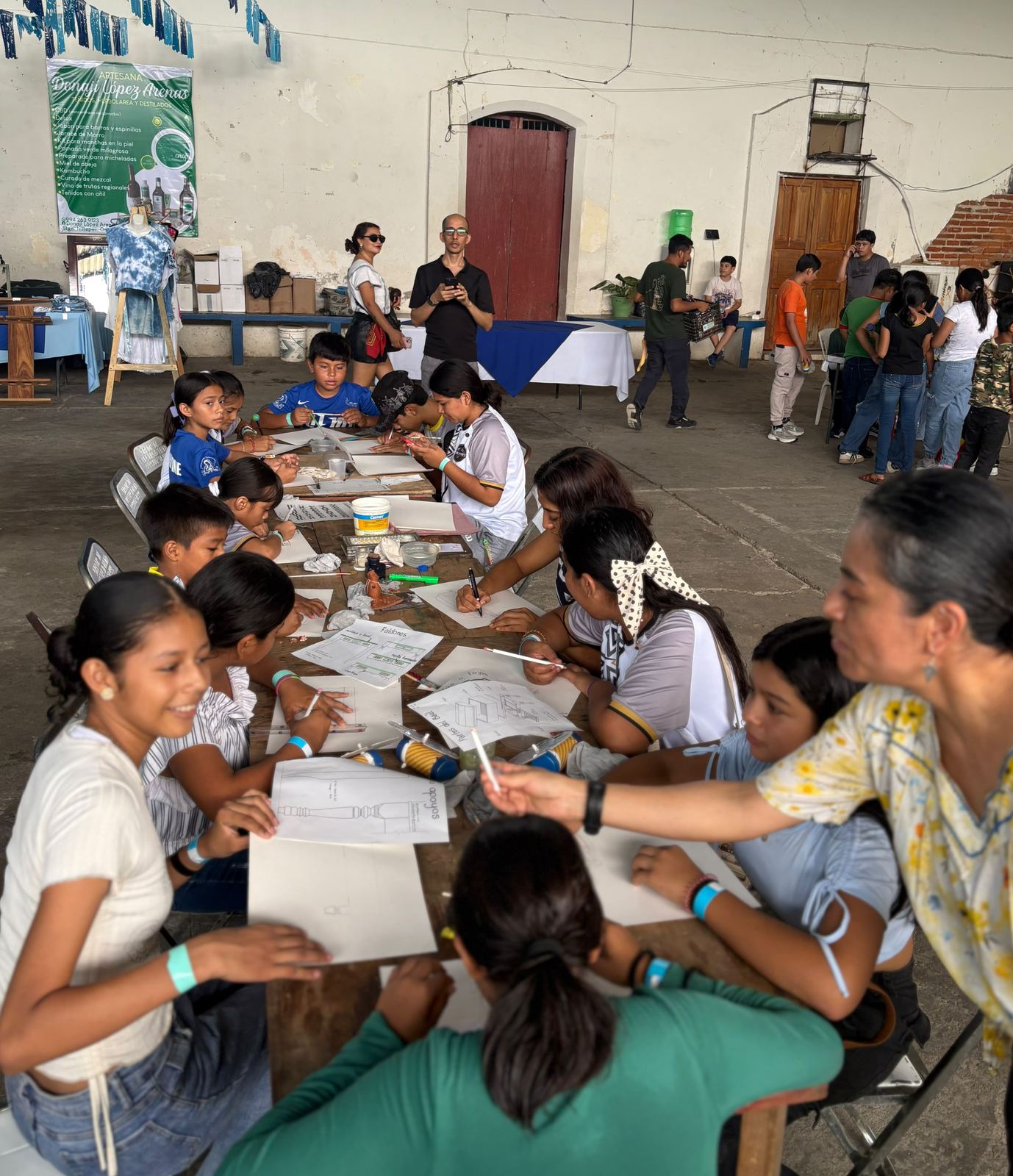
Participants work on decorated-trunk artwork at Diana García’s Nuestro Baúl añil workshop. Courtesy of César Arturo Vázquez Guzmán.
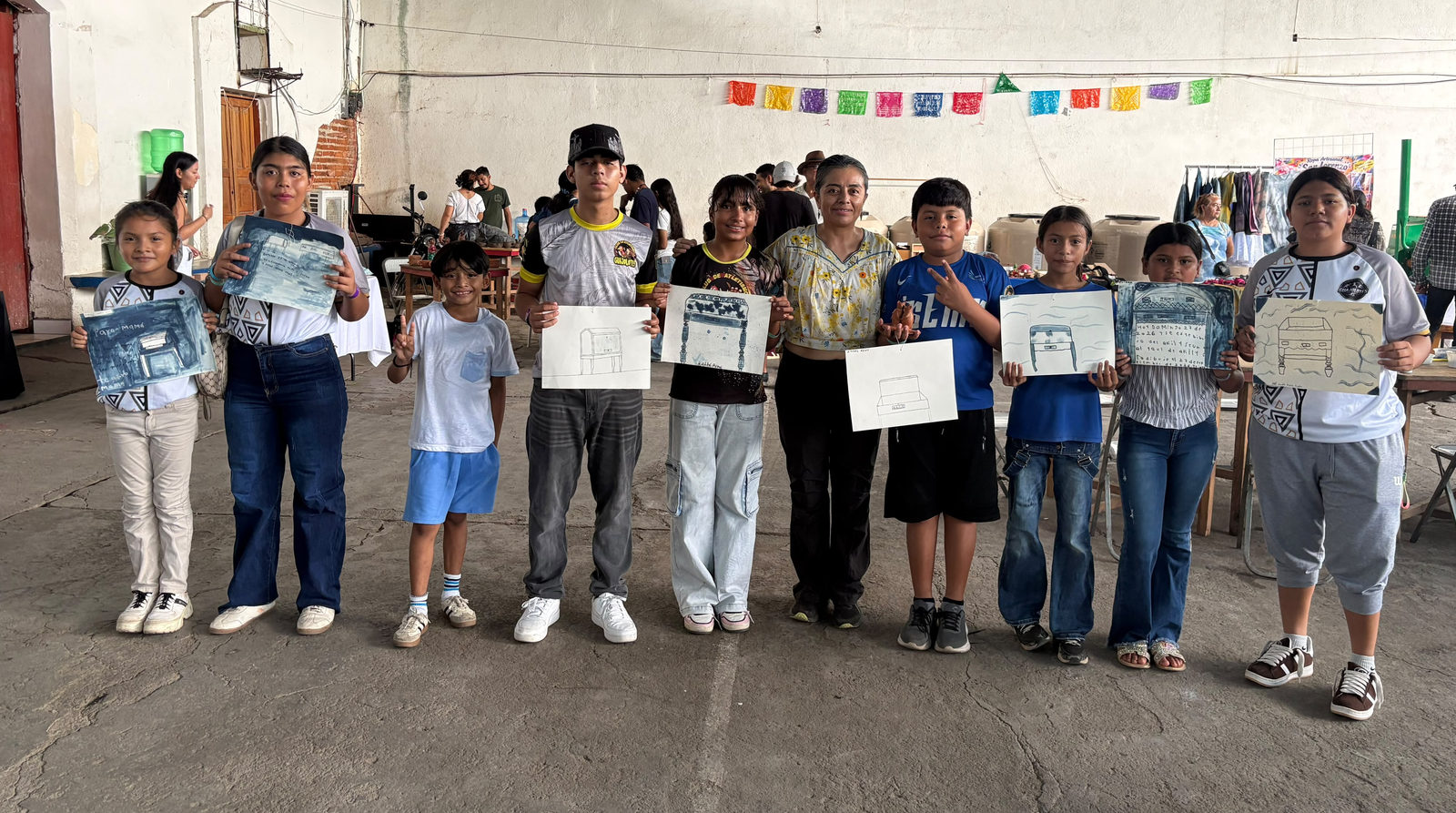
Club de Atletismo Guajolotes members display their completed artwork at the fair. Courtesy of César Arturo Vázquez Guzmán.
One part of Sunday was more personal. I am president of Oax Sport A.C., which supports Club de Atletismo Guajolotes, a local athletics team. The fair was an opportunity for us to meet its members.
We coordinated with César Arturo Vázquez Guzmán, who works with the team. Diana García led Nuestro Baúl añil, an arts workshop listed on Sunday’s official program for 11 a.m. She also had a stand for her artistic activities at the fair. That stand and workshop were Diana’s arts activities, separate from Oax Sport’s support for the team.
The athletes joined Diana around worktables, making images of decorated trunks and holding up their finished pieces. After the workshop, Arturo shared an image of the group training on a covered court. The sequence gave me a chance to see the young athletes in another setting, participating in the fair’s cultural program and then returning to their sport.
Visiting Santiago Niltepec for the fair
For readers considering a future visit, Santiago Niltepec is in Oaxaca’s Isthmus of Tehuantepec. The fourth Feria Cultural del Añil took place on September 26 and 27, 2026, with free scheduled activities and an early-morning production tour. The dates may change in another year, so check Oaxaca’s Secretaría de Turismo for the next program.
The organizers also post their programs on Instagram at @feriacultural_anil.
The drive from Oaxaca de Juárez took about 7 hours with stops, on the old road through many towns. The newer Mitla–Tehuantepec highway opened in January 2025, offering another route between Oaxaca’s Central Valleys and the Isthmus. Anyone planning to attend a 5 a.m. field tour should confirm its departure point, transport arrangements, and availability directly with the organizers.

Wind turbines on the drive from Oaxaca de Juárez to Santiago Niltepec, September 25, 2026. Photo: Fahad Hizam.
We stayed at Hotel Marsi in Santo Domingo Ingenio, about 15 minutes by car from Santiago Niltepec. We walked around town, visited the old sugar factory and went to the market. In Spanish, ingenio means sugar mill, and the name reflects the town’s history. A 2017 social impact study filed with Mexico’s Energy Secretariat (page 55) traces Santo Domingo Ingenio’s origin to a trapiche, a small sugarcane mill, established in 1837. It later developed into a sugar factory.
During our visit, it was hot and humid, with heavy rain in the afternoons.
Allow time for the market and the community activities, as well as the field visit. I bought an añil blouse for MXN 800, a small artisan añil pouch for MXN 100, and 25 grams of añil for MXN 100. Prices are from September 2026.
I returned home on Monday, September 28. The part of Niltepec I keep returning to is Saturday morning: a bundle of freshly cut jiquilite lying beside the field as the daylight grew stronger.

Private investigator and criminal-justice researcher based between Mexico City and Oaxaca. He works on financial crime, due diligence, and asset tracing, and writes on policing, organized crime, corrections, and the law in three languages. More about Fahad →
Get the next essay by email.
One email each time I publish a new essay. Unsubscribe anytime.
SubscribeDiscover more from Fahad Hizam alHarbi
Subscribe to get the latest posts sent to your email.